Efficient Generation
Image · Video · 4D
Make generation faster and cheaper, and less dependent on costly paired data and 3D labels.
What we cut
Efficient AI · Do more with less
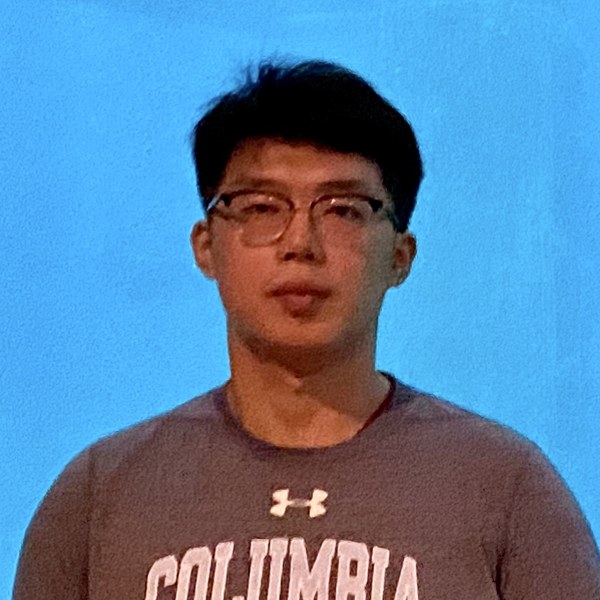
Professor · Generative Models · LLM Post‑training · AI Agents
I am a Professor at the School of Information Science and Technology, University of Science and Technology of China (USTC), working in Prof. Yongdong Zhang's group. Before joining USTC, I was a postdoctoral researcher at the National University of Singapore (NUS), working with Prof. Angela Yao and Prof. Tat-Seng Chua. I received my Ph.D. in Computer Science from NUS, advised by Prof. Tat-Seng Chua.
My group works on Efficient AI. Generative models, foundation models and agents have mostly become stronger by spending more: more paired data, more parameters, more sampling steps, longer reasoning and more model calls. We ask how to keep the capability while spending less, in three directions: efficient generation of images, videos and 4D scenes; efficient post-training of LLMs and VLMs; and efficient agents for spatial understanding and social simulation.
My earlier research focused on video understanding, including video question answering, causal and grounded video reasoning, and 3D affordance. Our Invariant Grounding for Video Question Answering was a CVPR 2022 Best Paper Finalist. I am a recipient of the NSFC Excellent Young Scientists Fund (Overseas).
Same capability, smaller bill. Each direction cuts a different part of the cost.
Image · Video · 4D
Make generation faster and cheaper, and less dependent on costly paired data and 3D labels.
What we cut
LLMs · VLMs · RL · On-policy distillation
Train models on tasks without a ground-truth verifier, and turn every unit of training compute into learning.
What we cut
Spatial understanding · Social simulation
Agents that reason reliably about 3D space and simulate how large populations respond, at a cost that scales.
What we cut
Recent results in efficient generation. Struck-through numbers are what a standard approach spends; amber is what ours needs.
Recasts video editing as editing one frame and propagating it. Best overall score among open-source video editors in our evaluation (3.08 vs. 2.49).
A pretrained 3D generator edits each frame's mesh into the next, adding the 3D supervision that 2D losses lack. Preferred by users 84.8% of the time.
International Trade Fair “Ideas – Inventions – New Products” (纽伦堡国际发明奖金奖), for a safe and controllable video generation system.
School of Information Science and Technology, University of Science and Technology of China.
Students and postdocs. I am looking for motivated Ph.D. and Master's students, undergraduate interns and postdocs who want to make generative models, foundation models and agents cheaper to train and run. Please email me your CV and a few lines on what you would like to work on.
欢迎对高效生成模型、大模型后训练、智能体方向感兴趣的同学(博士、硕士、本科实习)和博士后加入,请将简历和感兴趣的方向发送至邮箱。
Industry collaboration. We welcome joint projects on cutting the training and inference cost of generative models, LLMs and agents.